Google and its five biggest competitors – Alphabet, Apple, Amazon, Facebook and Microsoft – control almost everything crucial to the present and future of consumer tech. Smartphones, laptops, app distribution, voice assistants and AI, streaming music and video, cloud computing, online shopping, advertising – it’s all running through these companies.
Make Money with Google Colab
Two years ago, Google gifted machine learning developers with a free tool called Colab to access the company’s GPU and TPU resources, giving them the ability to execute their code on Google’s cloud infrastructure. It was a great way to give beginners and mid-level practitioners a chance to work with the hardware they need without having to pay for it.
Since then, Colab has grown to become the de facto digital breadboard for demos in the AI research community. And it has a huge number of paid users – some of whom have spent thousands of dollars to use its service.
Paid plans for Colab offer more CPUs and TPUs, faster GPUs, access to higher memory machines, terminal access to a connected virtual machine, and more. They are available in three tiers, with the free version offering a limited 12 hours of CPU and TPU time per month.
If you’re a new user, the free plan gives you 12 hours of access to a GPU with an Intel Xeon CPU at 2.20 GHz, 13 GB RAM, and a cloud TPU with 180 teraflops of computational power. The Pro and Pro+ plans also let you commission additional CPUs, TPUs and GPUs for up to 24 hours a month.
What’s more, Google Colab comes with multiple pre-installed libraries for a variety of ML-oriented languages. These include NumPy, Pandas, Matplotlib and TensorFlow. Click here to grasp additional details visit make money with google colab
The paid plans also allow you to set a quota on how many compute units you want to consume before the limit resets. Once you’ve exhausted your quota, the plan automatically reverts to the free tier limits.
How to use Colab with Google Drive
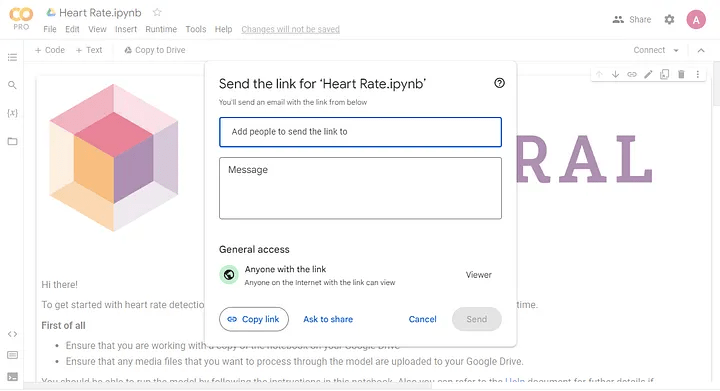
All of your Google Colab notebooks are stored in your Google Drive account, just like your Google Docs and Sheets files. You can then easily share them with other people and edit them if you wish.
When you have a lot of data in your Colab notebook, you’ll want to be able to save it somewhere that doesn’t clutter up your local drive space. One way to do that is by mounting external Python files.
Fortunately, Google Colab makes this fairly easy to do. Just add a code cell to your notebook, and it will give you the option to mount your local Python files or any file stored on Google Drive.
You can then view these files in the same window or resize them using the Files tab. You can also view the files in a separate browser window and share them as a link.
It’s a great way to work with large data sets and to collaborate with others. But if you’re more comfortable working with your own files and don’t need a lot of storage space, you may be better off sticking with the plain Jupyter notebook.
 make money with google colab